 kratai SDD Toolkit is live
Build the Right Thing
with the SDD Toolkit
kratai is an AI-native, visual toolkit for Spec-Driven Development (SDD) — it defines use cases, roles, and a data model for a new project, or generates them from your existing code.
A companion for your AI coding agent
kratai isn't where you write code — it runs alongside Claude Code, Cursor, or whatever you already use, holding the spec and architecture context while your coding agent handles implementation. Same repo, same ground truth, built side by side.
See how it fits into your workflow →
Start Building the Right Thing
Sign up and get $30 in AI credit to use inside the desktop app — download it today.
Get Started + $30 AI CreditNo credit card required
Don't just read your code —
spec it, see it
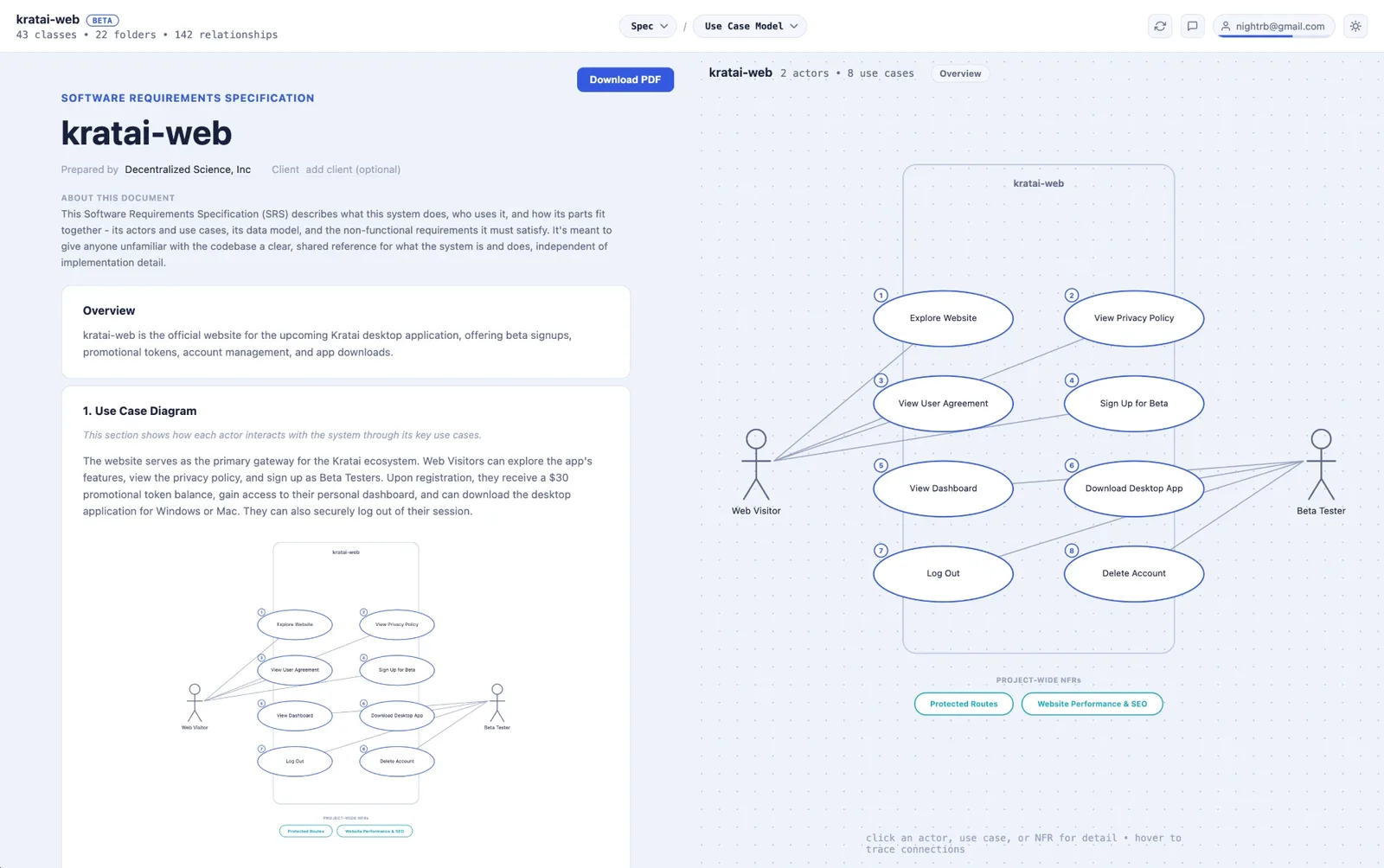
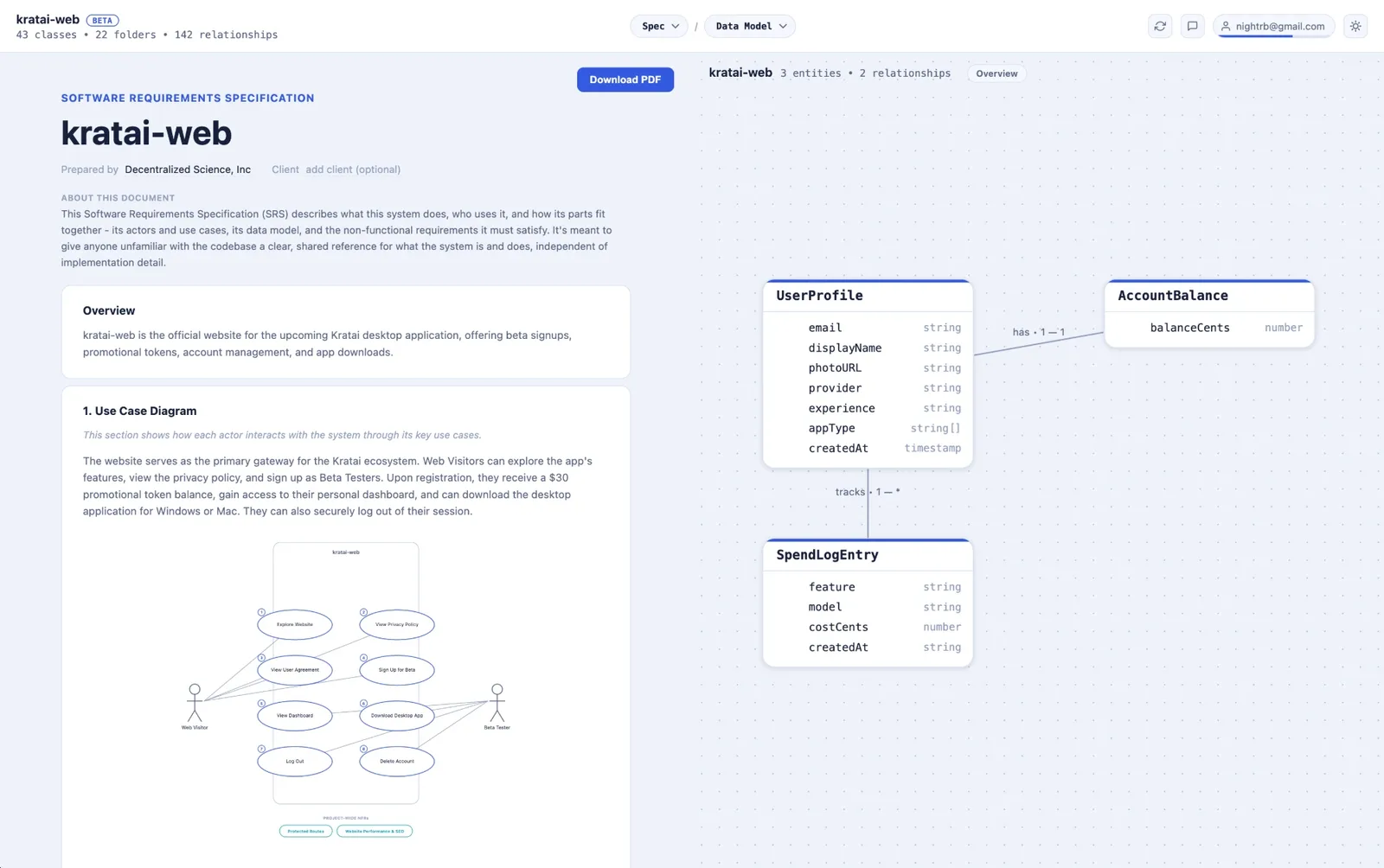
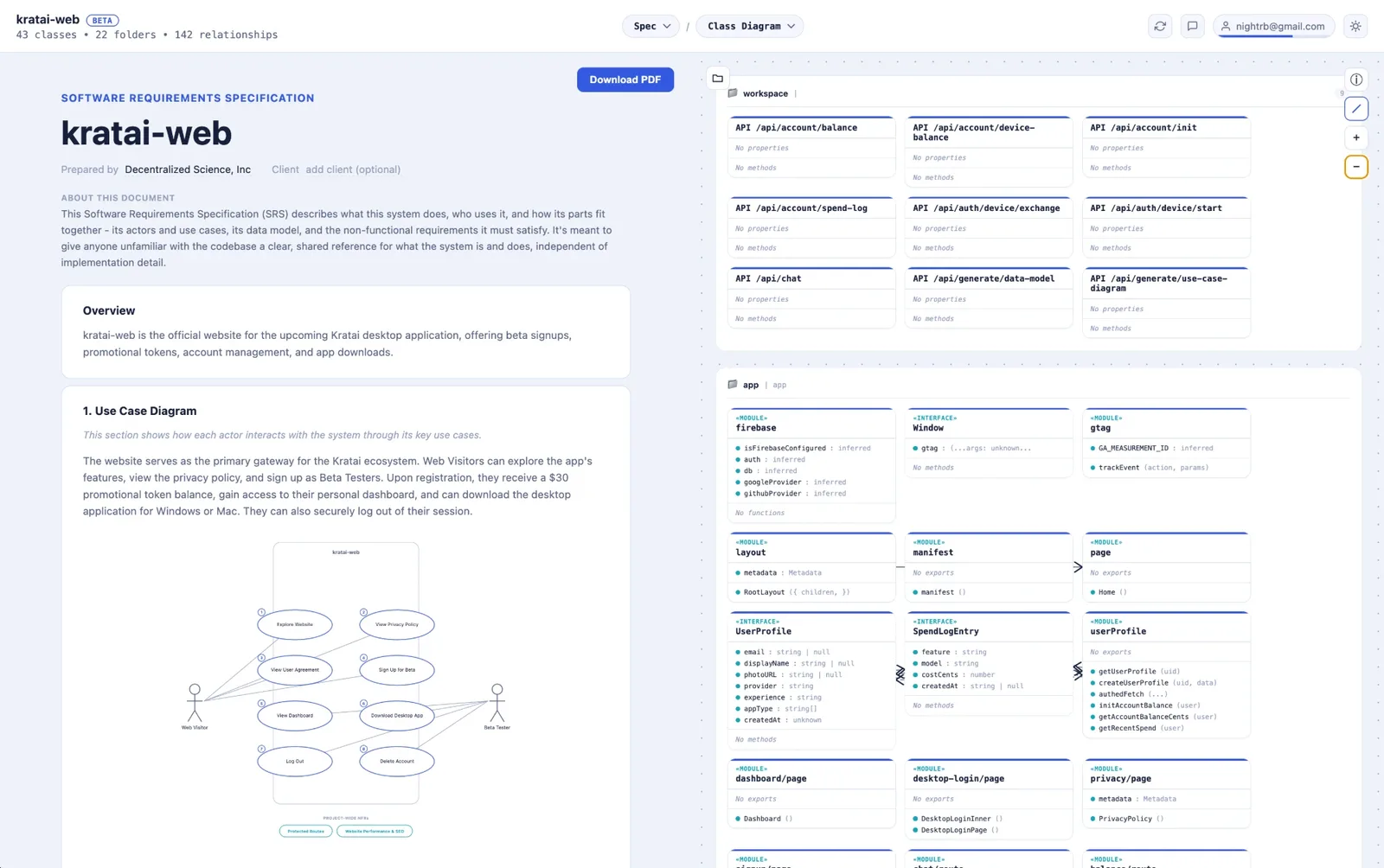
Every use case, actor, and entity is extracted straight from your real code, then rendered as a real diagram you can navigate — no hallucinations, no guesswork.
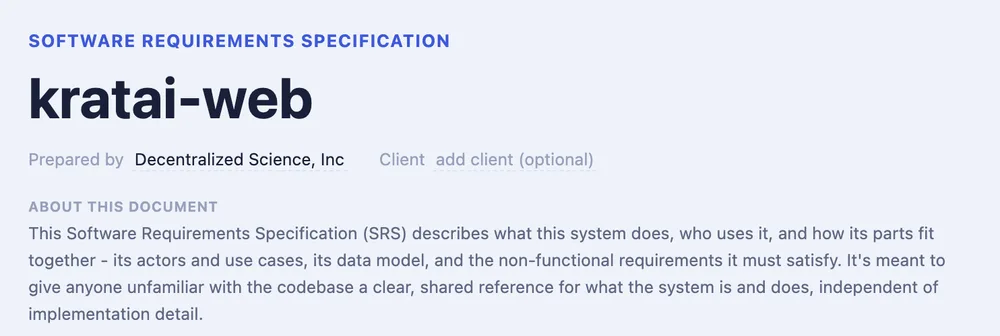
Software Spec
A real Software Requirements Specification document, generated and kept in sync with your code — actors, use cases, data model, and non-functional requirements in one place.
Learn more →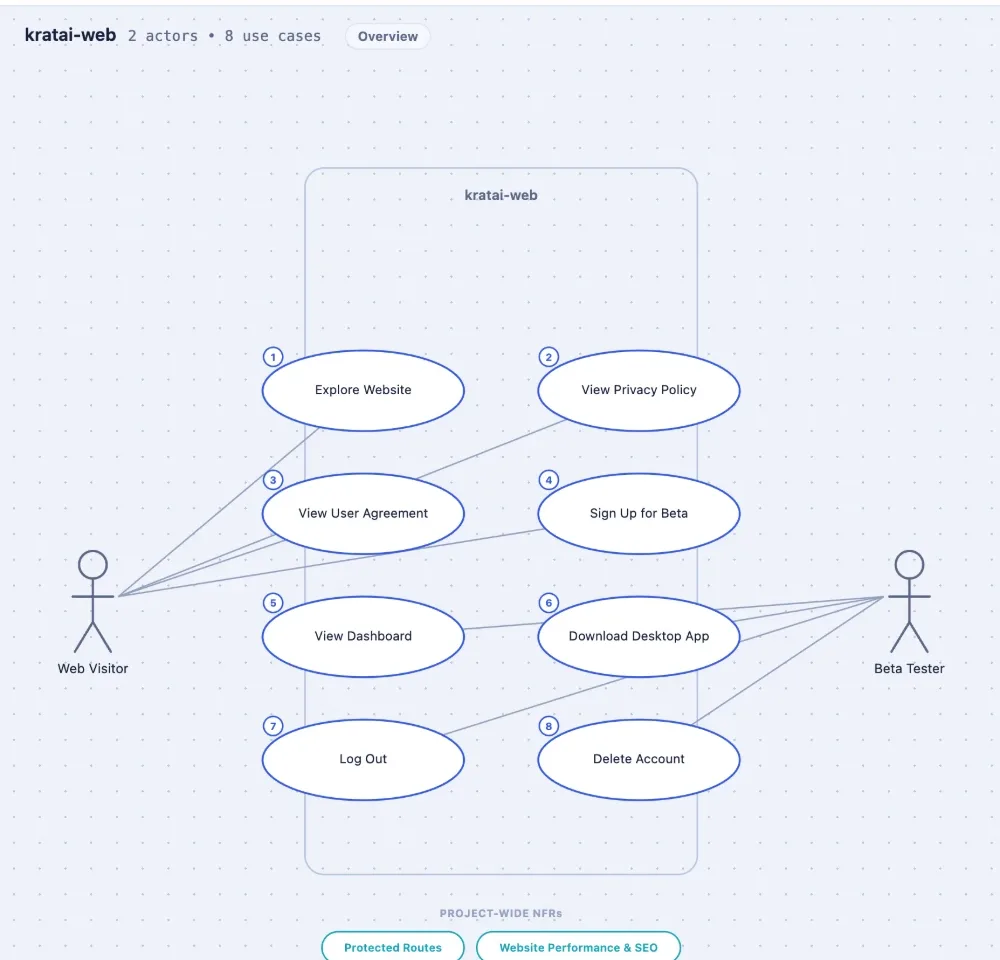
Use Case Model
Atomic, UAT-ready use cases pulled from your real routes and screens — one actor, one trigger, one outcome each, so a client can walk through and verify one at a time.
Learn more →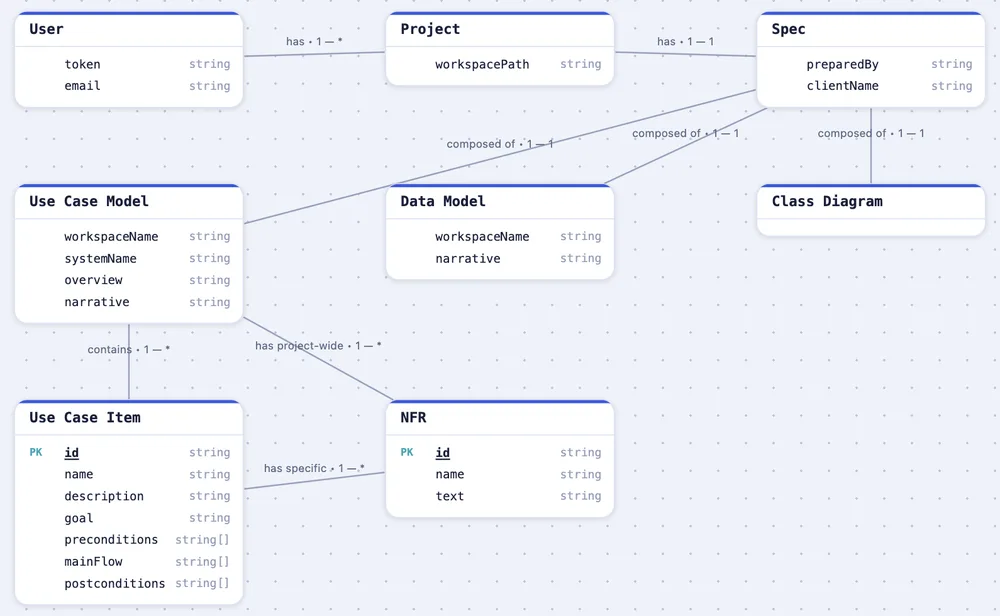
Data Model
Entities and relationships pulled straight from your schema and data-access code — always grounded, never invented.
Learn more →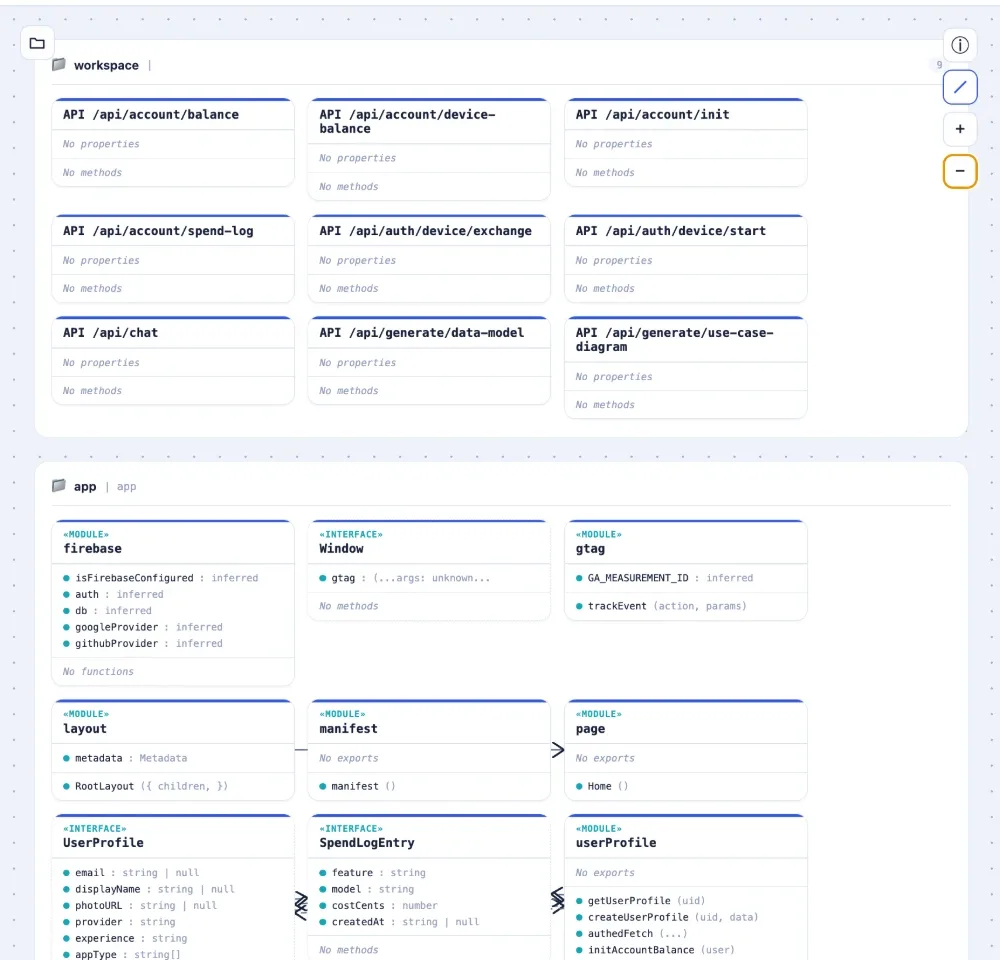
Class Diagram
Classic UML-style class diagrams with typed relationships, auto-generated from your real code — always in sync.
Learn more →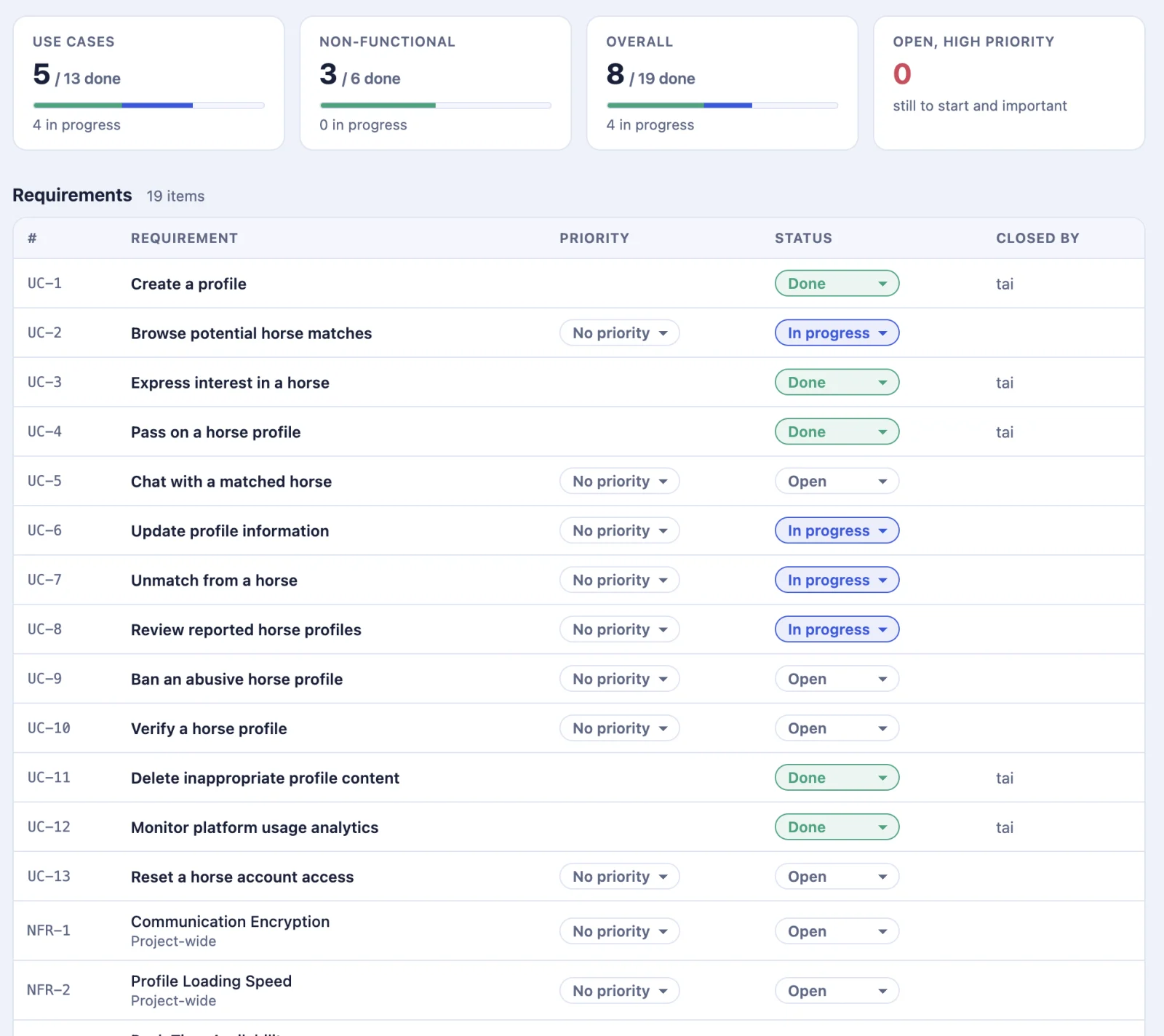
Track Progress from the Spec
Give every use case and requirement a status and a priority, see how much is done at a glance, and export a progress report for your client — all from the same spec, with no separate tracker to maintain.
Learn more →
AI Helps with Specs
Ask about any use case or entity and kratai reads the actual files behind it before answering — no hallucinated behavior.
Learn more →Questions, answered
Does my code leave my machine?+
kratai reads files locally and only sends the relevant snippets to the AI provider when it needs to ground an answer or generate part of your spec — never your whole codebase, and never .env files, keys, or other credential-shaped paths, which are blocked outright.
What languages does kratai support?+
TypeScript, JavaScript, Python, Java, and PHP, including common frameworks like React, Next.js, NestJS, Django, Spring Boot, and Laravel. More languages are on the way.
Does the generated spec always match my code?+
Only at the moment it's generated. From there you're free to edit it via chat — add detail, change scope, plan ahead — and it won't auto-resync behind your back. That's deliberate: once you're steering the spec, it's allowed to describe what you're building next, not just what's already there. More in How kratai Works.
What does the $30 credit cover?+
It's AI credit to use inside the desktop app — chat, spec generation, and detail-fill all draw from it. That's what's available for now; billing for usage beyond that is still being worked out. More in Installation.
Is kratai open source?+
Yes — the code is on GitHub.
Start with a spec you can trust
Sign up for $30 in AI credit, download the desktop app, and point it at your first project.
Get Started + $30 AI CreditNo credit card required